Resource Library

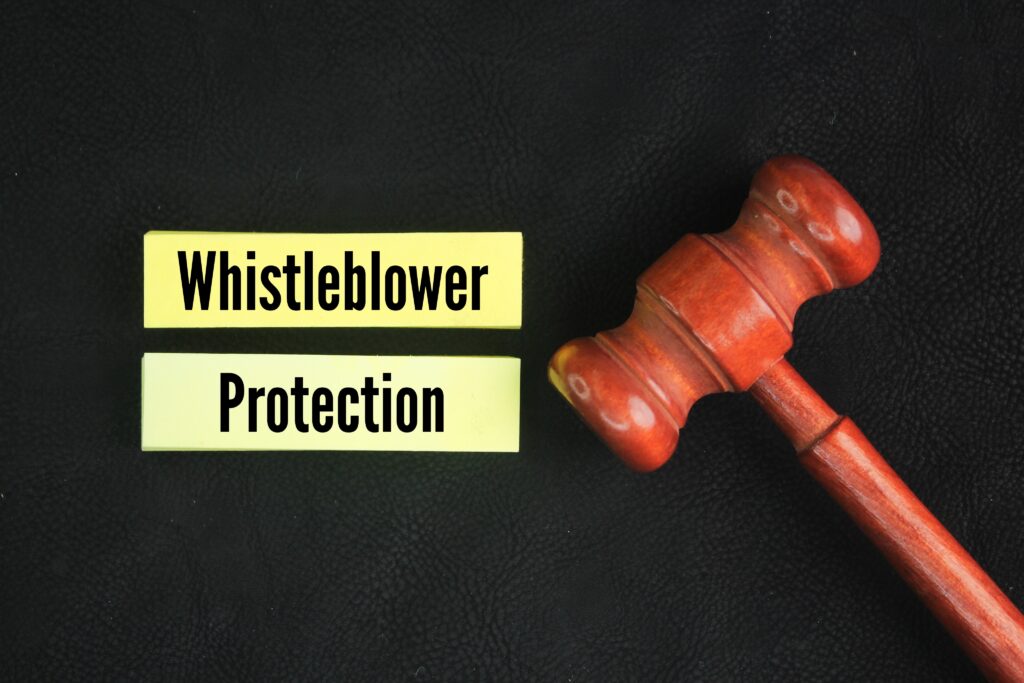
Judge’s gavel next to paper labeled ‘Whistleblower Protection.'

Whistleblower Protection Act of 1989

Strong whistleblower protections are the backbone of meaningful fraud enforcement. The Whistleblower Protection Act of 1989 (WPA) stands as one of the most important milestones in this evolution—especially for federal employees who witness wrongdoing from within. Before the WPA, government workers who reported fraud, abuse, or waste were often left exposed to retaliation. The 1989

Whistleblower Protection Act of 1989 Read More »

Gavel, stethoscope, and medicine tablets — illustrating the intersection of healthcare and medical malpractice law.

Pfizer $2.3 Billion Settlement (2009)

The Pfizer $2.3 billion settlement in 2009 was a watershed moment in healthcare fraud enforcement. Not only was it the largest healthcare fraud settlement in U.S. history at the time, but it also showcased the power of whistleblowers in holding the world’s biggest pharmaceutical companies accountable. The case revolved around allegations of Pfizer illegally promoting

Pfizer $2.3 Billion Settlement (2009) Read More »

Judge’s gavel beside assorted pills on a wooden desk.

United States ex rel. Franklin v. Parke-Davis (2004)

Qui tam cases filed by whistleblowers don’t just result in financial recoveries — someitmes they reshape entire industries. United States ex rel. Franklin v. Parke-Davis (2004) is an example of such industry-shifting cases. The whistleblower in that case was Dr. David Franklin, a former medical liaison at Parke-Davis, a subsidiary of Warner-Lambert (later acquired by

United States ex rel. Franklin v. Parke-Davis (2004) Read More »

Woman blowing a whistle and pointing toward camera.

Relator

In federal False Claims Act (FCA) cases, the whistleblower is often referred to as the “relator.” We emphasize this term because it highlights the special legal role ordinary citizens can play in exposing fraud. A relator is the individual who files a qui tam lawsuit on behalf of the United States government. Unlike a traditional

Relator Read More »

Doctor holding multiple pill bottles and tablets.

Stark Law

Healthcare fraud often hides in plain sight. One of the most important terms for anyone exploring fraud in the healthcare system is the Stark Law, also known as the Physician Self-Referral Law. It’s a concept that comes up frequently in whistleblower cases, yet many people outside the legal and medical fields aren’t sure what it

Stark Law Read More »

Young woman physician wearing a stethoscope, writing a prescription.

Stark Law (Physician Self-Referral Law)

The Stark Law, formally known as the Physician Self-Referral Law, is one of the most important — and most complex — regulations in healthcare fraud enforcement. At its core, Stark Law prohibits physicians from referring Medicare or Medicaid patients to entities in which they (or an immediate family member) have a financial interest. For example,

Stark Law (Physician Self-Referral Law) Read More »